
In the modern warehousing and logistics industry, electric pallet trucks have become an indispensable core piece of equipment. One of the key factors determining their performance, efficiency, and operating costs is the battery.
Choosing the wrong battery is like feeding the wrong fuel —it either won’t run at all or its lifespan will be significantly reduced.
This guide will help you make the best decisions in 2026 from multiple dimensions, including battery type, parameter selection, application scenarios, cost analysis, and supplier selection .
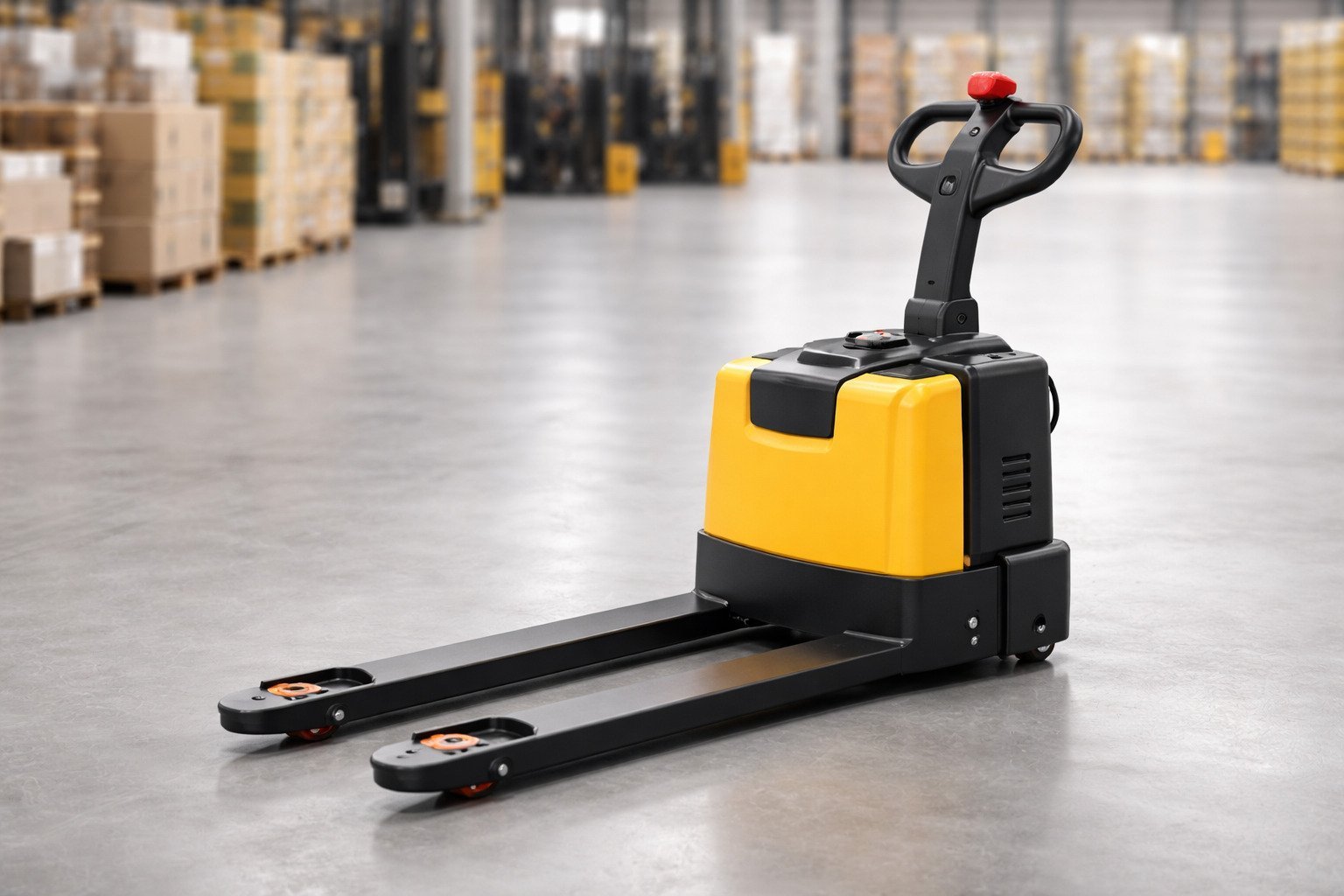
1. Main Types of Batteries for Electric Pallet Trucks
Currently, mainstream batteries on the market are mainly divided into two categories:
1. Lead-acid battery
Features:
Low initial cost
Mature technology
High maintenance requirements (requires water addition)
Long charging time (6–8 hours)
Applicable scenarios:
Single-shift warehouse
Limited budget enterprises
👉 But by 2026, this type of battery is gradually being phased out.
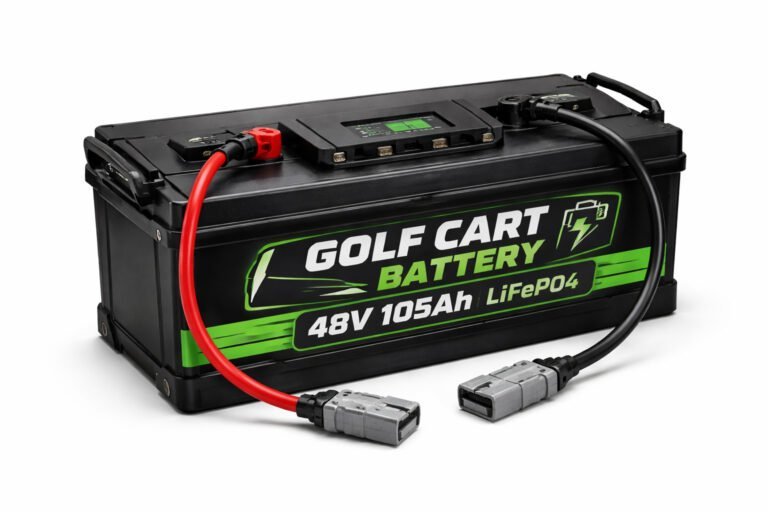
2. Lithium iron phosphate battery (LiFePO4 Battery)
Features:
Ultra-long cycle life (2000–4000 cycles)
Fast charging (1–2 hours)
No maintenance required
High safety (not easy to catch fire)
Applicable scenarios:
Multi-shift system (2-3 shifts)
High-intensity logistics center
Automated Warehousing Systems (AGV/AMR)
👉 The conclusion is straightforward:
if your budget allows, prioritize lithium batteries.
2. Key Parameters: Choosing a battery isn’t about “how expensive it is,” but about “whether it’s suitable.” ⚙️
2.1. Voltage
Gemeinsame Konfigurationen:
24V (most mainstream)
36V (High Load)
48V (High-end equipment)
Selection principle:
👉 Must be fully compatible with the device, otherwise it will directly damage the system.
2.2. Capacity (Ah)
Battery life is determined by capacity:
Capacity range Usage time
100–150Ah 4–5 hours
150–200Ah 6–8 hours
200Ah+ Operating 24/7
👉 Tip:
Choose a capacity 20% higher than your needs to avoid deep discharge and reduced lifespan.
2.3. Discharge Rate
For transport vehicles that frequently start and stop:
Recommended discharge capacity ≥1C
Otherwise, the following will occur:
Insufficient power
Voltage drops quickly
2.4. Cycle Life
Lead-acid: 500–1000 times
Lithium battery: 2000–4000 cycles
👉 The long-term cost difference is huge (the details will be calculated later).
3. Usage scenario determines battery type (core decision point)
Scenario 1: Light use (single shift)
Usage time: <5 hours/day
Recommendation: Lead-acid or low-capacity lithium batteries
👉 Cost priority
Scenario 2: Moderate use (two shifts)
Usage time: 8–12 hours
Recommendation: LiFePO4 battery
👉 Balancing cost and efficiency
Scenario 3: Heavy usage (three shifts/24 hours)
Usage time: >16 hours
Recommendation: High-capacity lithium battery + fast charging
👉 Otherwise you’ll be trapped in “charging queue hell”
4. Charging Method: Many people overlook this, but it determines efficiency.
4.1. Lead-acid batteries
Must be completely filled
Cannot be charged whenever needed
A dedicated charging room is required.
👉 Cumbersome operation
4.2. Lithium batteries (with clear advantages)
Supports Opportunity Charging
You can recharge during your lunch break.
Memoryless effect
👉 Warehouse efficiency is directly improved
5. Safety: A non-negotiable bottom line 🔒
When choosing a battery, you must pay attention to the following:
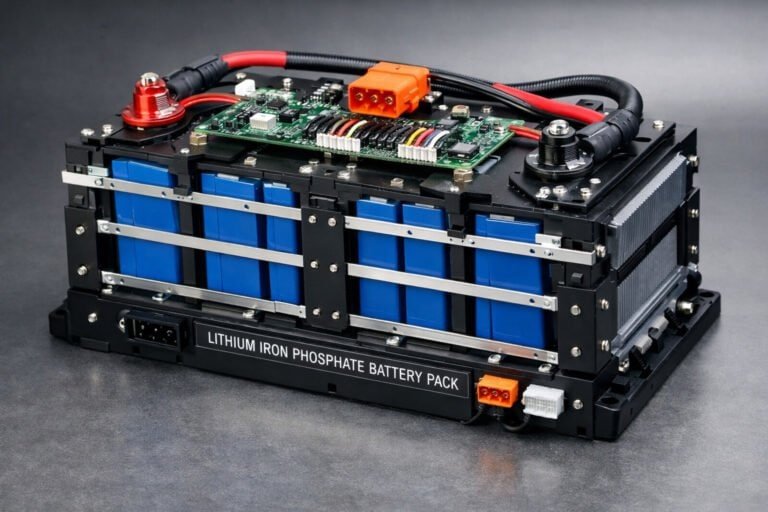
5.1. BMS (Battery Management System)
Core functions:
Overcharge protection
Over-discharge protection
Temperature control
Short circuit protection
👉 A lithium battery without a BMS is a time bomb.
5.2. Protection rating (IP rating)
suggestion:
At least IP54 (dustproof and waterproof)
5.3. Structural Design
A high-quality battery should possess the following characteristics:
Reinforced outer shell
Internal support structure
Seismic design
6. Cost Analysis: Don’t just look at the price, look at the “total life cycle cost” 💰
Comparison example:
project lead-acid batteries lithium batteries
Initial cost Low high
Service life 1–2 years 4–6 years
Maintenance costs high Almost 0
Electricity cost efficiency Low high
👉 Conclusion:
Lithium batteries can recoup their cost in 2-3 years, after which it’s all profit.
7. How to choose a reliable battery supplier
Choosing a supplier is more important than choosing a battery.
Core Standards:
✅ Production experience (≥10 years)
✅ Customization support available
✅ BMS R&D capabilities available
✅ Export certifications available (CE/UN38.3/MSDS)
✅ Successful case studies available (AGVs, forklifts, etc.)
8. Why are more and more companies choosing to customize lithium batteries?
Standard battery ≠ optimal solution
Custom batteries can:
Perfectly matches device size
Optimize weight distribution
Improve battery life
Integrated Intelligent Management System
👉 For automated warehousing, this is an “essential upgrade”.
Zusammenfassend
Choosing a battery for an electric pallet truck is essentially about striking a balance:
Cost vs. Efficiency
Short-term vs. Long-term
Standard vs Custom
If you want the device:
More stable
More durable
More efficient
By 2026, a trend will be very clear:
👉Lithium iron phosphate batteries are becoming the industry standard.
Looking for high-performance battery solutions for electric pallet trucks?
We offer:
Customized LiFePO4 battery solutions
Supports AGVs / Warehouse equipment / Industrial vehicles
Built-in intelligent BMS
Global Export Certification
📩 Contact us for a free battery configuration plan and quote!
 English
  Chinese
  Japanese
  German
  French
  Korean
