
Mit der rasanten Entwicklung des Elektrofahrradmarktes stoßen Benutzer und Marken oft auf verschiedene Fragen beim Kauf oder der Anpassung von Batterien. Als Kernkomponente des gesamten Fahrzeugs wirken sich Leistung, Sicherheit und Lebensdauer des Akkus direkt auf das Fahrerlebnis aus.
Als professionelles Forschungs- und Produktionsunternehmen für Lithiumbatterien haben wir die häufigsten Fragen der Branche zusammengestellt und professionelle Antworten von unserem Expertenteam bereitgestellt, um Markenkunden und Endverbrauchern ein besseres Verständnis für Elektrofahrradbatterien zu vermitteln.
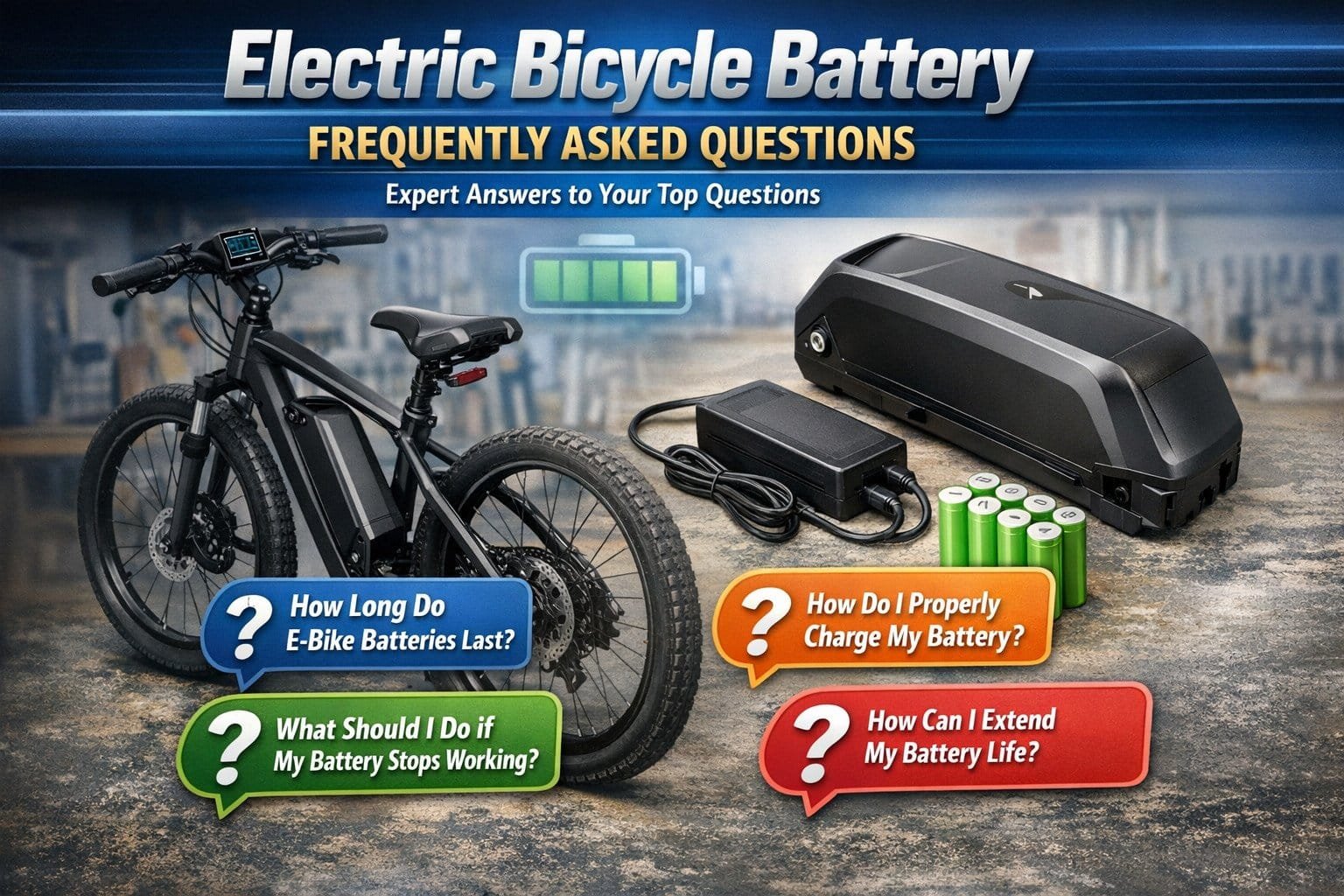
Teil 1. Häufig gestellte Fragen zur Batterie für Elektrofahrräder (FAQ)
1. Wie lange halten die Batterien von Elektrofahrrädern? Wie kann man ihre Lebensdauer verlängern?
Antwort:
Die Lebensdauer einer Lithiumbatterie wird in der Regel in Zyklen gemessen (eine vollständige Ladung und Entladung zählt als ein Zyklus), im Allgemeinen 800-1200 Zyklen.
Zu den Methoden zur Verlängerung der Batterielebensdauer gehören:
Vermeidung von Überentladung (unter 20%) oder Überladung (längerer Aufenthalt bei 100%)
Verwendung des passenden Ladegeräts zur Vermeidung von Überströmen
Vermeiden von hohen Temperaturen oder längerer Sonneneinstrahlung
Regelmäßige Überprüfung des Batteriestatus durch das BMS, um das Gleichgewicht und den Zustand der Batterie sicherzustellen
2. Welche Rolle spielt das BMS (Batteriemanagementsystem) in Elektrofahrradbatterien?
Antwort:
Das BMS ist das “Gehirn” der Elektrofahrradbatterie und hat unter anderem folgende Hauptfunktionen:
Überwachung von Spannung, Strom und Temperatur in Echtzeit
Schutz der Batterie vor Überladung, Überentladung, Überstrom oder Überhitzung
Ausgleich der Spannung der einzelnen Zellen, um die Lebensdauer des gesamten Akkupacks zu verlängern
Unterstützung der intelligenten Datenkommunikation (SOC, Leistungsanzeige usw.)
Bei der Batteriekonstruktion von Yizhan Electronics ist das BMS eine Standardkonfiguration, die Sicherheit und Leistung gewährleistet.
3. Ist die angegebene Kapazität von Elektrofahrradbatterien korrekt? Kann die Reichweite den Nennwert erreichen?
Antwort:
Die Nennkapazität der Batterie ist ein theoretischer Wert, und die tatsächliche Reichweite wird von folgenden Faktoren beeinflusst:
Effizienz der Motorleistung und des Steuersystems
Fahrzeuggeschwindigkeit, Last und Fahrbedingungen
Temperaturumgebung (niedrige Temperaturen verringern die Reichweite)
Alterungsgrad der Batterie
Alle Batterien von Yizhan Electronics werden vor dem Verlassen des Werks einem Kapazitäts- und Alterungstest unterzogen, um sicherzustellen, dass die Nennkapazität genau und zuverlässig ist.
4. Sind die Batterien von Elektrofahrrädern wasserdicht? Sind sie bei Regenwetter sicher zu benutzen?
A:
Die Wasserdichtigkeit hängt von der Konstruktion des Batteriegehäuses und dem Versiegelungsverfahren ab.
Yizhan Electronics bietet Batterien mit Wasserdichtigkeitsklassen von IP65 bis IP67 an, die das tägliche Fahren bei Regenwetter unterstützen.
IP65: Schutz gegen Strahlwasser, geeignet für Regentage oder leichte Wäsche.
IP67: Sicher bei kurzzeitigem Eintauchen (innerhalb von 1 Meter, 30 Minuten).
Gleichzeitig ist das BMS in das Gehäusedesign integriert, um sicherzustellen, dass die elektronischen Komponenten vor Wasserschäden geschützt sind.
5. Sind die Batterien von Elektrofahrrädern verschiedener Marken austauschbar?
A:
Eine Austauschbarkeit wird nicht empfohlen. Batterien verschiedener Marken oder Modelle weisen erhebliche Unterschiede in Bezug auf Spannung, Kapazität, BMS-Parameter und Schnittstellengestaltung auf.
Unbefugter Austausch kann zu:
Batterie und Motor passen nicht zusammen
BMS-Fehlfunktion
Potenzielle Sicherheitsgefahren
Yizhan Electronics empfiehlt die Verwendung von Original- oder kundenspezifischen Batterien, die zum gesamten Fahrzeug passen, um Sicherheit und Leistung zu gewährleisten.
6. Was sind die Vorteile von maßgeschneiderten Batterien für Elektrofahrräder?
A:
Für Markenkunden können maßgeschneiderte Batterien hergestellt werden:
Perfekte Übereinstimmung mit der Fahrzeugstruktur, dem Aussehen und der Schnittstelle
Optimierte Spannung, Stromstärke und Kapazität auf der Grundlage von Nutzungsszenarien
Individuelles Schutzniveau und BMS-Funktionen
Unterstützung von Markenlogos und exklusiven Gehäusedesigns
Yizhan Electronics verfügt über eine eigene Fabrik und kann kundenspezifische Dienstleistungen aus einer Hand anbieten, von der Auswahl der Zellen bis zur Massenproduktion und Lieferung.
7. Wie lädt und entlädt man Elektrofahrradbatterien sicher?
A:
Verwenden Sie das originale oder kompatible Ladegerät, vermeiden Sie unsachgemäßes Schnellladen
Nicht in Umgebungen mit hohen Temperaturen aufladen
Wenn Sie den Akku für längere Zeit nicht benutzen, halten Sie ihn zwischen 40-60%
Vermeiden Sie häufiges vollständiges Entladen oder Überladen
In Kombination mit den Schutzfunktionen des BMS kann dies die Lebensdauer der Batterie maximieren und die Sicherheit gewährleisten.
Schlussfolgerung
Die Batterie des Elektrofahrrads ist das Herzstück der Leistung und Sicherheit des Fahrzeugs. Eine qualitativ hochwertige Batterie erfordert ein zuverlässiges BMS-Management, eine angemessene Kapazitätsauslegung und strenge Tests im Werk.
Als professioneller Hersteller von Lithiumbatterien hat sich Yizhan Electronics dazu verpflichtet, sichere, stabile und in großen Mengen herstellbare kundenspezifische Batterielösungen für globale Elektrofahrradmarken zu liefern, die den Marken helfen, ihre Wettbewerbsfähigkeit zu verbessern und die Anforderungen der Nutzer an das Fahrgefühl zu erfüllen.
Wenn Sie auf der Suche nach einem zuverlässigen Partner für Elektrofahrradbatterien sind, kontaktieren Sie uns bitte. Yizhan Electronics wird professionelle technische Unterstützung und Massenproduktion Dienstleistungen anbieten.
 English
  Chinese
  Japanese
  German
  French
  Korean
